
The email arrived at 7:14 in the morning, while Aryan was still in the shower.
Priya read it on her phone sitting on the edge of the bed. Government quarter allotted, Nehru Nagar Road, Bhopal, possession from today. She forwarded it to him, then got up and started on the second bag.
He came out with a towel around his shoulders, read it standing in the doorway, said nothing for a moment. Then he picked up his phone and called the cement company to confirm his audit schedule for the following day.
Three steps and turn, three steps and turn. The particular pacing that meant he was already somewhere else.
They had been married four months.
The quarter was on the second floor of a building that smelled of other people’s years. Three rooms, a narrow kitchen, a ceiling fan in the bedroom that clicked softly on every fourth rotation. Aryan carried both suitcases up without being asked. Within an hour he had found the gas valve, checked the water pressure, identified a ridge at the bottom of the front door that stuck if you pushed too fast. Then he opened his audit files on the kitchen table.
His shaving kit was still in the bag.
Priya unpacked everything else.

She had brought the ivory saree almost as an afterthought — rolled in its own cloth bag, unpressed, the kind of thing you pack and then forget about until you’re alone. It had a thin gold border and a drape that asked more of the wearer than it gave. She had practiced once at home, door locked, and come away feeling equal parts self-conscious and something else entirely.
She took it out now.
The bedroom caught the western light from four to six. At five-fifteen the wall behind the bed was the colour of old ghee, warm and quiet. She set two tea candles on the window ledge. She put on the playlist she never played when her in-laws were home. She took more time with her hair than she would have admitted to anyone.
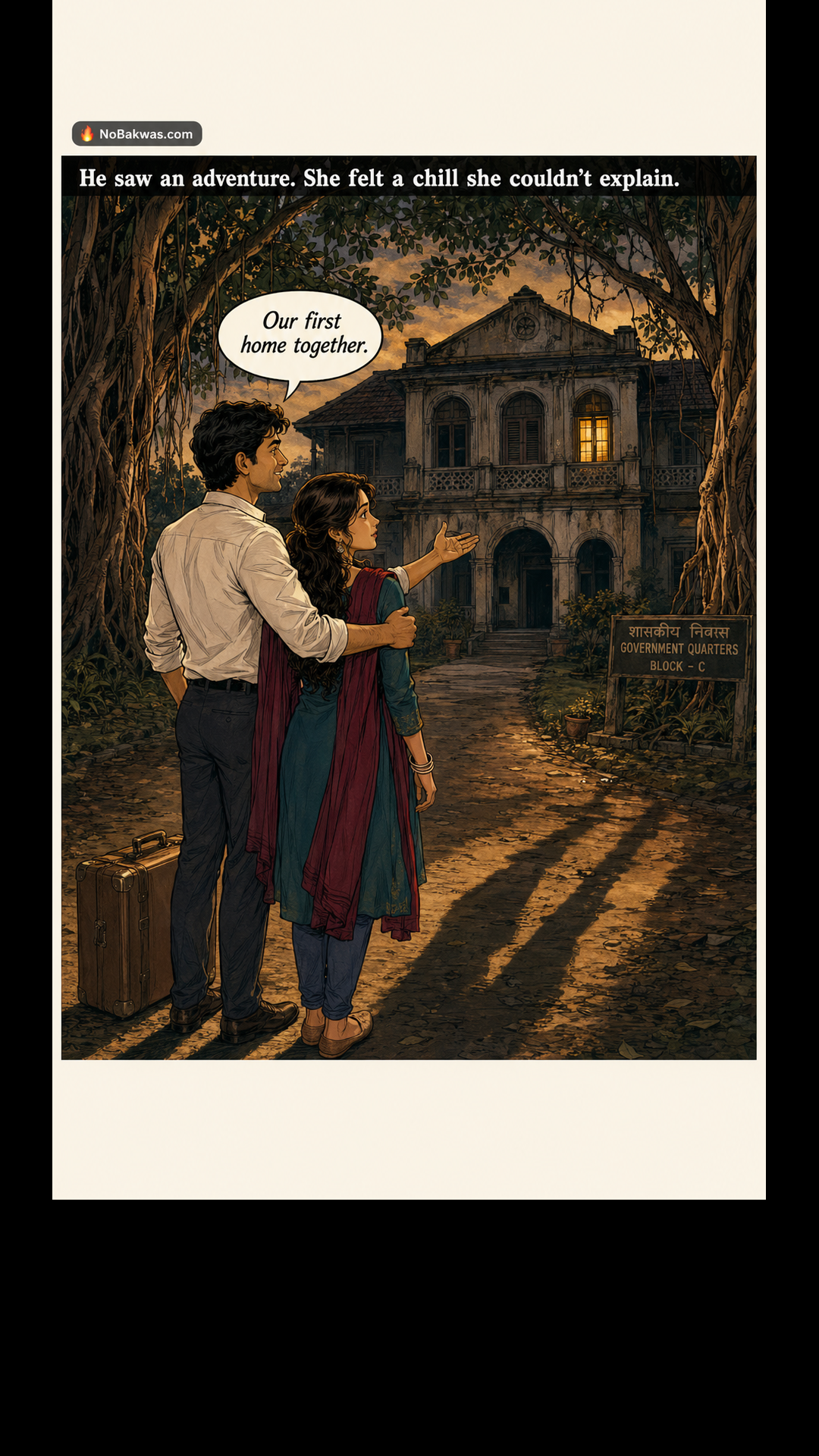
By seven-thirty she was ready. She sat on the edge of the bed in that light, the gold border catching the candle, and waited for the sound of his key.
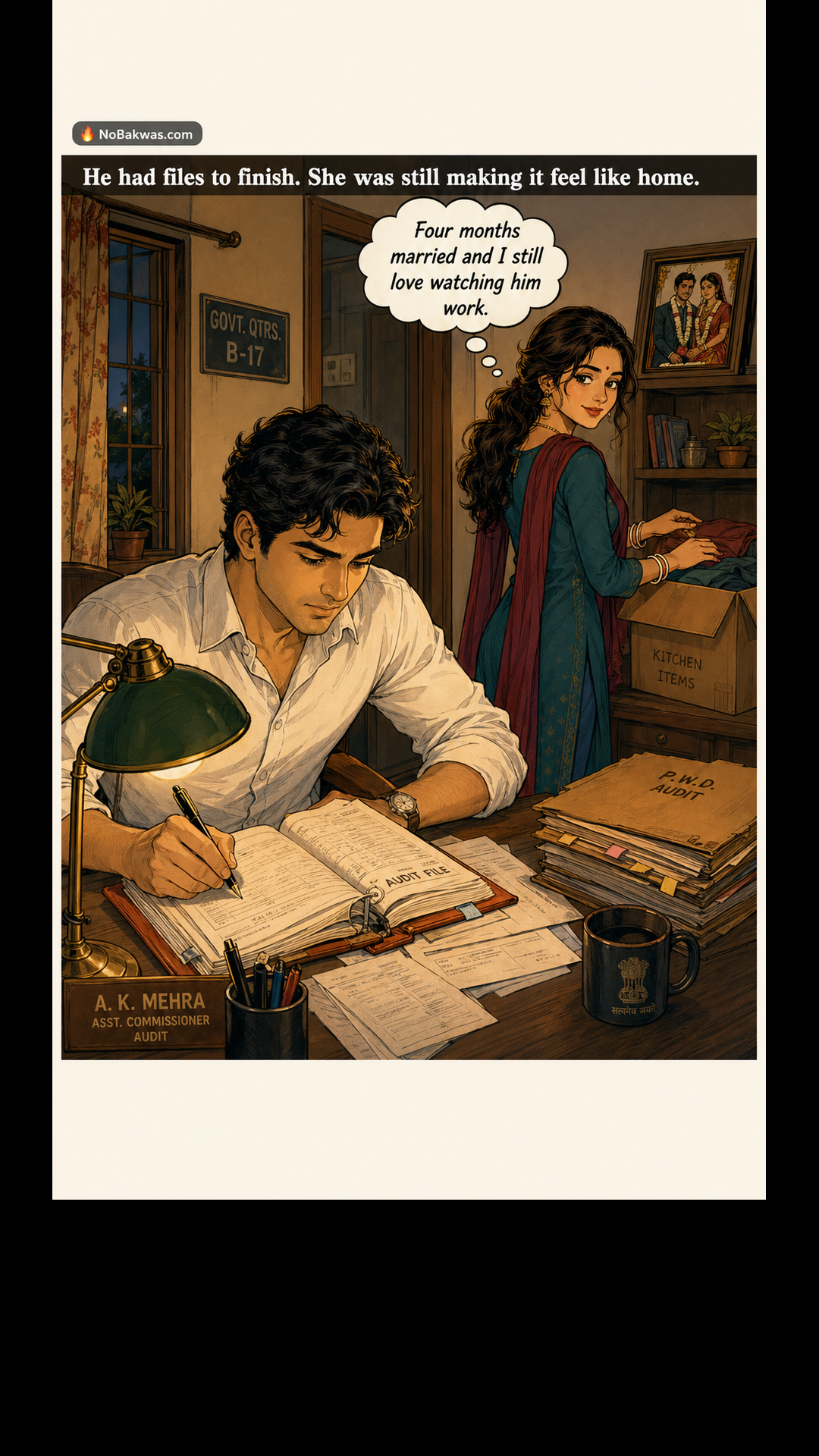
Her phone lit up at seven thirty-two.
Picking up food from the main road. Home in twenty.
She read it twice. She thought: finally, tonight is just us.
Aryan was standing outside Sharma’s takeaway thinking about a voice.
He had called Mehta at four — R.K. Mehta, owner of Mehta Cement, a man who listened to bad news the way you’d listen to a sound in the walls of a house you’ve recently bought. Aryan had laid out the three irregularities plainly, the way he always did, without softening. Mehta had gone quiet, then said he would look into it. His voice had been very controlled.
It was the kind of controlled that meant something.
Aryan was turning this over when the car pulled up beside him.
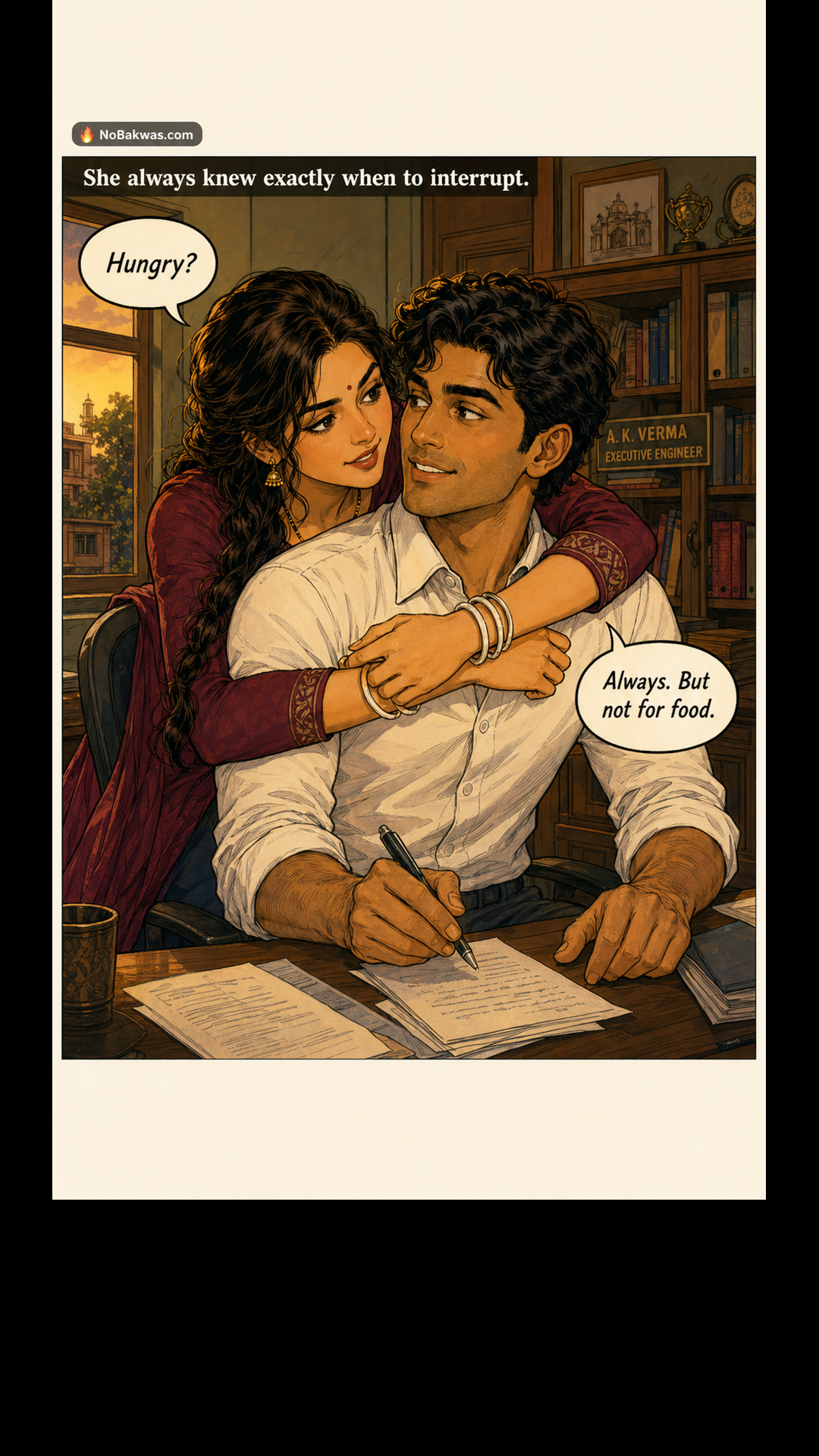
The first man was large, heavy across the chest, with hands that suggested habitual use. The second moved quickly — sharp eyes, everything deliberate — and Aryan had registered the face for perhaps two seconds before something struck the side of his head and the pavement arrived.
They drove. When the car stopped at his own building, Aryan understood, with the slow clarity of a mind working through damage, that Mehta had made a decision faster than expected.
His phone was gone. The food was still at Sharma’s.

Priya heard the key at eight past eight.
The door pushed open and caught briefly on the ridge at the bottom. That small resistance — familiar already after just one day.
She stepped into the hall thinking: finally.
The man who came through the door was not Aryan.
He was heavy through the middle, beard unattended, and he was looking at her with an expression that suggested the briefing he had received had not fully prepared him for what he found. Behind him, gripping the door frame with one hand to stay upright, was Aryan — collar torn, blood dried at the corner of his mouth. A second man held his arm at an angle that kept him very still.
Aryan was not looking at the men. He was not looking at the room. He was looking at her, his face somewhere she had not seen it go before — past fear, well past it, in a place that had taken the measure of everything and found it terrible and was now only, entirely, worried about her.
The large man came inside and pulled the door shut.
He took in the candles. The music still playing. Her standing in the ivory saree, one shoulder bare, the whole careful arrangement of the evening she had spent three hours building.
He smiled slowly.
“Oh,” he said. “What a beautiful wife you have.”
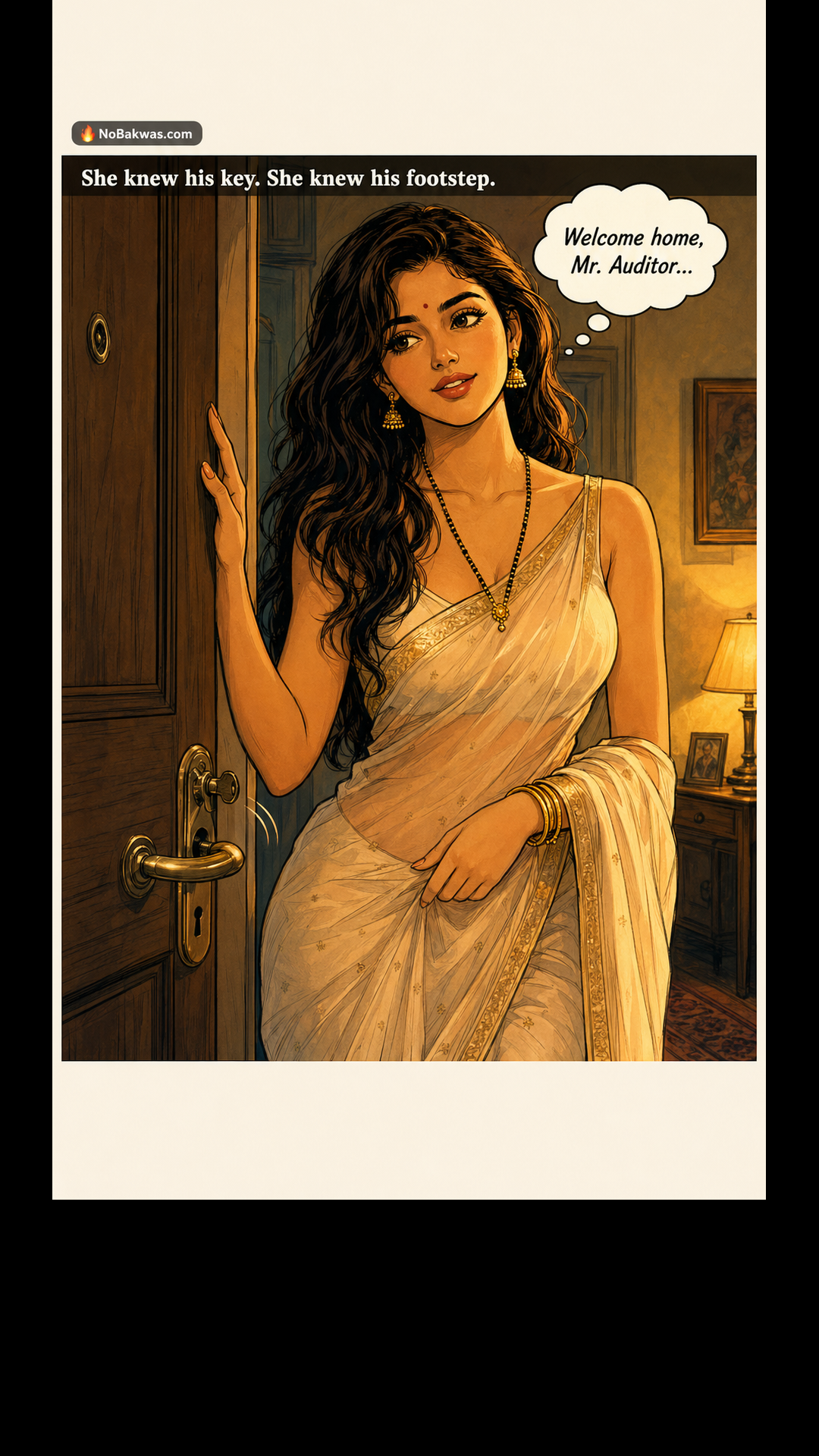

Part 1 of 4 · Wrong Key series · Continue: Part 2

Reader Comments
Loading comments…
Leave a Comment