Radhu and the Tiger
On the edge of a green Odia village lived a cheerful boy named Radhu. He was about ten years old, with sparkling eyes and quick feet. Every morning, Radhu would take the family’s cows and goats to graze in the forest beyond the fields. The animals liked him, for he whistled merry tunes and tossed them handfuls of grass.
But Radhu also had a mischievous mind. He loved to play tricks. And his favourite prank was to fool the villagers.
One sunny morning, as his goats munched grass under the tall sal trees, Radhu climbed a small rock. He cupped his hands around his mouth and shouted, “Tiger! Tiger! Save me!”
At once, the farmers working in the paddy fields dropped their tools. Mothers left their chores. Men ran with sticks and women with pots and pans. Everyone rushed to the forest, their faces tense with worry.
“Where is the tiger?” shouted one uncle, panting.
“Did it harm the cows?” asked another.
But Radhu, instead of pointing to a tiger, burst out laughing. “Ha ha! There is no tiger. I was only joking! Look at your worried faces!”
The villagers frowned. Their fear turned into anger. “Radhu, don’t do this again,” an elder warned. But Radhu only giggled.
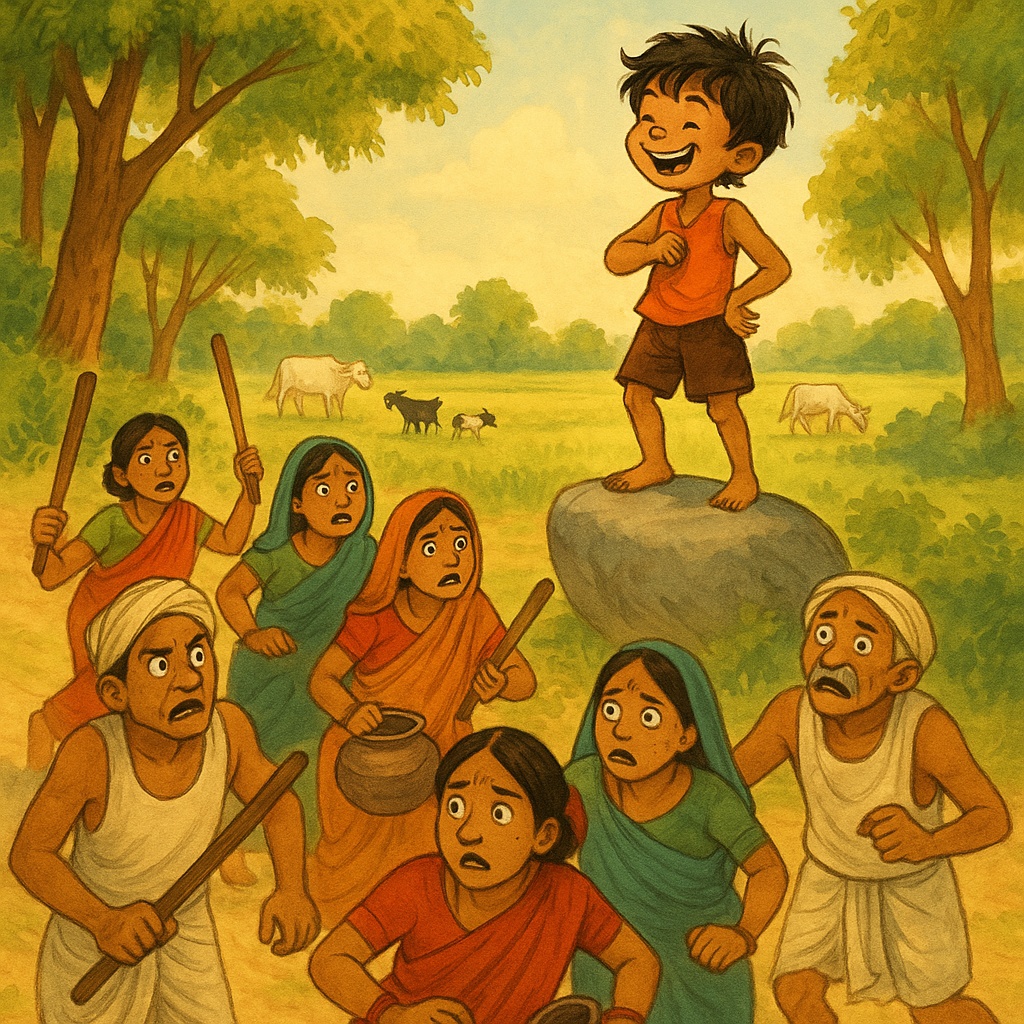 Radhu standing on a rock, laughing while villagers gather below — Edge of forest near green fields
The next day, Radhu repeated the trick. Again he screamed, “Tiger! Tiger!” The villagers came running, anxious to help. And again Radhu laughed till his sides hurt.
Now the villagers were really upset. “We will not believe him again,” they muttered. “He only makes fun of us.”
But Radhu, full of mischief, thought, Oh, they will surely come every time. It is too funny to see them panic.
One afternoon, the sky turned golden as the sun slowly dipped. The cows were chewing cud, and the goats were nibbling leaves. Suddenly, Radhu froze. From behind a bush, a striped figure moved. A tiger—real and fierce—emerged silently, its yellow eyes glinting.
Radhu’s heart thumped loudly in his chest. Fear rushed through him. His hands trembled. He screamed at the top of his voice, “Tiger! Tiger! Please help me!”
But far away in the fields, the villagers heard his cry. They shook their heads.
“It must be Radhu’s joke again,” said one.
“Yes, why should we leave our work for his trick?” said another.
No one came.
The tiger growled and sprang forward. Radhu’s goats bleated in panic and scattered. Radhu quickly climbed a nearby tree, his palms slipping from sweat. The tiger caught one small white goat—Radhu’s favourite. With a roar, it dragged the goat away into the forest shadows.
From the tree, Radhu’s eyes filled with tears. His chest felt heavy with guilt. “If only I had not lied earlier,” he whispered, shivering. “Now nobody believes me, even when I am truly in danger.”
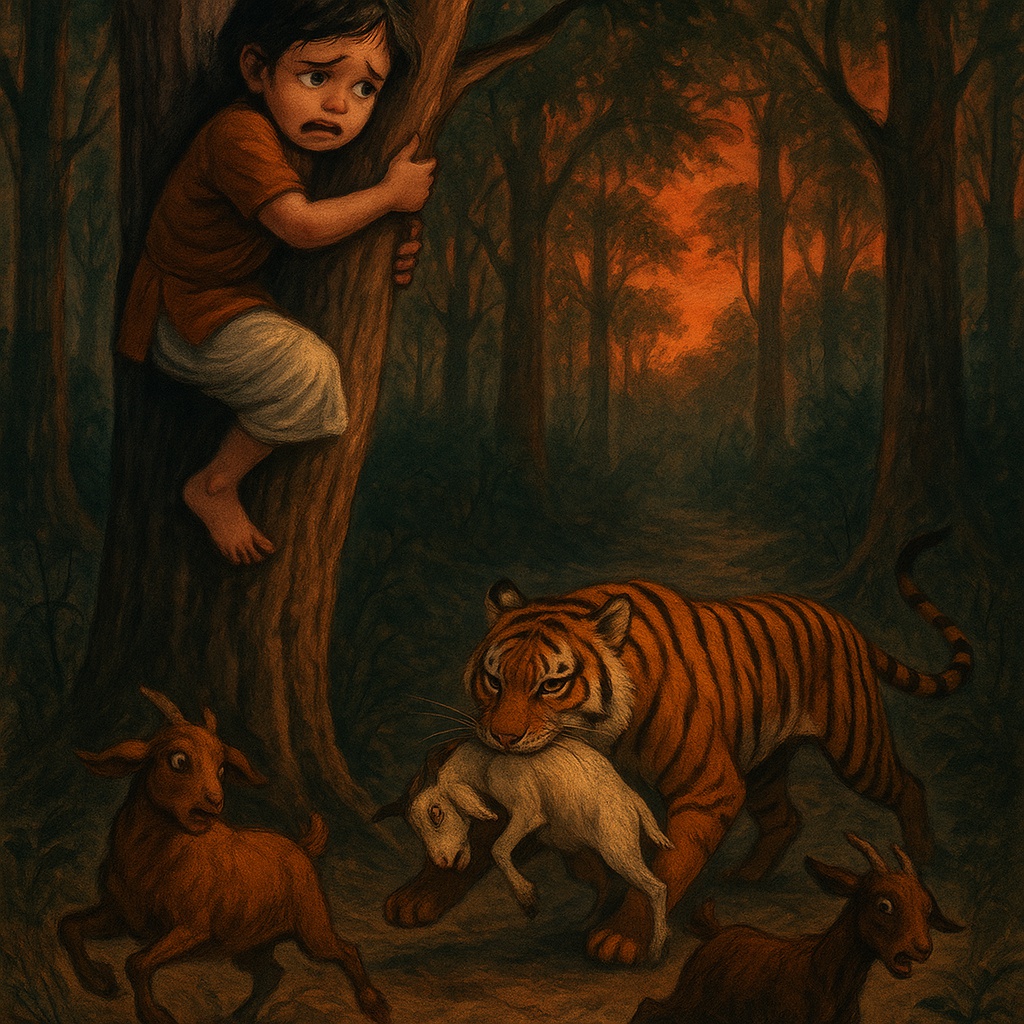 Radhu clinging to a tree while a tiger drags away a goat — Deeper in the forest with tall trees
By the time Radhu returned to the village, it was dark. The animals walked slowly behind him, missing their companion. The villagers looked up in surprise.
“Radhu, why are you so late?” asked an auntie.
“You look pale. What happened?” asked another.
With a trembling voice, Radhu told them the truth: how the tiger had come, how nobody came to help, and how his favourite goat was lost forever. His eyes brimmed with tears.
The villagers listened silently. They felt sorry for the boy but also firm. “Radhu,” said the village elder gently, “this is why we warned you. When you lie too often, people stop trusting you. Even when you speak the truth, they will think it is another trick.”
Radhu nodded slowly. He understood now, deeply and painfully. From that day, he never told lies again. He became honest and careful with his words. And though the memory of the lost goat made him sad, it reminded him every day of the value of truth.
Moral of the Story
If we lie, people stop believing us even when we speak the truth. Always be honest, for truth builds trust.

Reader Comments
Loading comments…
Leave a Comment